

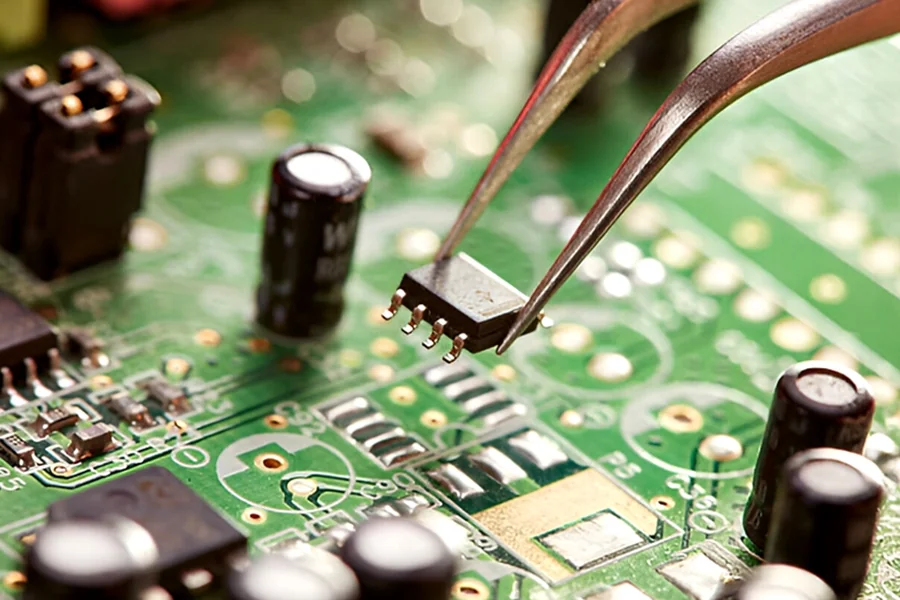
Control board assembly is a core process in electronic manufacturing that focuses on building printed circuit boards responsible for controlling, monitoring, and regulating electronic systems. These control boards act as the “brain” of devices, managing functions such as power distribution, signal processing, automation logic, and communication between components. From industrial machinery and medical equipment to consumer electronics and smart appliances, control board assembly plays a vital role in ensuring stable and accurate system operation.
As modern devices become more intelligent and interconnected, the complexity of control board assembly continues to increase. Manufacturers must achieve high reliability, precise component placement, and consistent performance while meeting strict industry standards.
What Is Control Board Assembly
Control board assembly refers to the process of mounting electronic components onto a printed circuit board that is specifically designed to control system operations. These boards often include microcontrollers, processors, sensors, power management circuits, and communication modules. The assembly process must ensure accurate interconnections so that commands, data, and power flow correctly throughout the system.
Role of Control Boards in Electronic Devices
Control boards manage decision-making functions within electronic systems. They interpret input signals, execute programmed logic, and generate output actions. In industrial environments, control board assembly supports automation, motor control, and process monitoring. In consumer products, it enables features such as temperature regulation, user interfaces, and connectivity.
Key Processes Involved in Control Board Assembly
Control board assembly involves multiple stages that must be carefully coordinated to achieve reliable results. Each stage impacts the overall functionality and lifespan of the control board.
Component Placement and Mounting
Accurate component placement is critical in control board assembly because even small alignment errors can disrupt signal flow or cause short circuits. Advanced placement equipment ensures that components are positioned according to design specifications. Both surface-mount and through-hole components may be used, depending on the board’s functional requirements and operating environment.
Soldering and Electrical Connectivity
Soldering creates the electrical connections that allow control boards to function. Controlled soldering processes ensure strong joints capable of withstanding thermal cycles, vibration, and long-term use. Consistent solder quality is especially important in control board assembly, where reliability directly affects system stability.
Design Considerations for Control Board Assembly
Successful control board assembly begins with thoughtful design. Engineers must consider electrical performance, thermal management, and manufacturability from the earliest stages of development.
Circuit Layout and Signal Integrity
Control boards often handle both high-power and low-signal circuits. Proper layout design helps prevent interference and ensures clean signal transmission. Trace routing, grounding strategies, and component spacing all contribute to stable performance in control board assembly.
Thermal Management and Durability
Heat generation is a common challenge in control board assembly, especially in industrial and power-related applications. Effective thermal management solutions such as optimized copper layers and proper component placement help dissipate heat and extend board lifespan. Durable materials and protective coatings may also be used to enhance resistance to moisture, dust, and mechanical stress.
Quality Control in Control Board Assembly
Quality assurance is essential in control board assembly because failures can lead to system downtime or safety risks. Comprehensive inspection and testing procedures help ensure that each board meets functional and reliability standards.
Inspection and Functional Testing
Visual inspection and automated inspection systems are used to identify solder defects, misaligned components, or assembly inconsistencies. Functional testing verifies that the control board operates as intended under real-world conditions. These steps reduce the risk of defects reaching the end user and improve overall production yield.
Applications of Control Board Assembly
Control board assembly is used across a wide range of industries due to its versatility and importance in system control.
Industrial and Automation Systems
In industrial settings, control boards manage machinery, robotics, and process automation. Control board assembly in these applications emphasizes durability, accuracy, and long-term reliability to support continuous operation.
Medical and Consumer Electronics
Medical devices rely on control board assembly for precise monitoring and control functions, where accuracy and compliance are critical. In consumer electronics, control boards enable smart features, energy efficiency, and user-friendly operation in everyday products.
Challenges in Control Board Assembly
Despite its importance, control board assembly presents several challenges that require expertise and advanced manufacturing capabilities.
Managing Complexity and Miniaturization
As devices become smaller and more complex, control board assembly must accommodate higher component density without compromising quality. Advanced manufacturing processes and experienced engineering teams are necessary to manage these challenges effectively.
Ensuring Long-Term Reliability
Control boards are often expected to operate continuously for years. Achieving long-term reliability requires strict process control, high-quality materials, and thorough testing throughout the control board assembly process.
Selecting the Right Manufacturing Partner
Choosing a reliable manufacturing partner is crucial for successful control board assembly. A capable partner provides engineering support, advanced equipment, and consistent quality control. Collaboration during design and production helps optimize manufacturability and reduce overall costs.
Conclusion
Control board assembly is a fundamental element of modern electronics, enabling intelligent control and stable performance across numerous applications. From design and component placement to soldering and testing, every stage requires precision and expertise. By working with an experienced provider offering PCB assembly in China, businesses can achieve high-quality control board assembly with cost efficiency, scalability, and dependable manufacturing support for both current and future electronic systems.
